- Clean Out Your PC
10 Windows maintenance tasks: keep your PC healthy with built-in tools. - Windows XP: Save Time with Keyboard Shortcuts
From CTRL-A to CTRL-Z. - Windows Vista: The Ins & Outs of Service Pack 1
A major update for the new OS. - All about Cores
What you need to know. - Digitize Home Movies
Put your homemade movies onto new media. - Take Control of Your Web Browser
Install, locate & configure your browser toolbars. - What to Do When... You Can't Listen to a CD/DVD
A computer and some quality speakers make for a great audio system. We show you how to troubleshoot a silent PC so you can kick back and enjoy your tunes.
Smart Computing July 2008 Magazine
Posted by Maxezone | 10:56 PM | Ebook, Pc, Phone, Technology | 0 comments »Smartphone and Pocket PC Magazine 2008 June/July
Posted by Maxezone | 10:50 PM | Ebook, Pc, Phone, Technology | 0 comments »Thaddeus Computing, formerly called Personalized Software, was founded in 1985. The company’s initial publication, The Portable Paper, was a newsletter covering the HP Portable Plus. When that line of computers was discontinued in 1991, Thaddeus Computing launched a newsletter related to the HP Palmtop called The HP Palmtop Paper. It was discontinued in 1999 following the demise of the HP Palmtop.
As the market moved toward PDAs, in 1997 Thaddeus Computing launched Handheld PC Magazine, the company’s first glossy magazine. It covered the Handheld PC devices based on Microsoft’s new Windows CE software. In 2000, with Microsoft’s launch of the Pocket PC hardware specification and software suite, the name was changed to Pocket PC. As Microsoft phased out the use of the Pocket PC nomenclature in lieu of Windows Mobile in 2007, the name of the magazine was changed to Smartphone & Pocket PC
DownloadDownload
PC World is a global computer magazine published monthly by IDG. It offers advice on various aspects of PCs and related items, the Internet, and other personal-technology products and services. In each publication, PC world reviews and tests hardware and software products from a variety of manufacturers, as well as other technology related devices such as still and video cameras, audio devices and televisions.Download
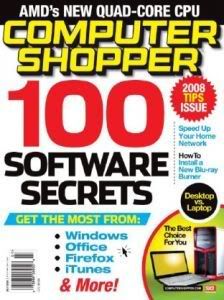
- 100 software secrets: Get the most from: Windows, Office, Firefox, iTunes & more!
- 2008 tips issue: Speed up your home network. How to install a new blu-ray burner.
- AMD's new quad-core cpu.
Help Yourself in Reading Holy Quran Arabic
Posted by Maxezone | 10:35 PM | Ebook, Religious | 0 comments »
Abdul Malik Mujahid, “Help Yourself in Reading Holy Quran Arabic “
Qari Abdussalam 2007 | ISBN:126-0278-90 | 64 Pages | PDF | 7 MB | English
Download
Translation Of The Meanings Of The Glorious Quran
Posted by Maxezone | 10:31 PM | Ebook, Religious | 0 comments »
Translation Of The Meanings Of The Glorious Quran: Saheeh International, based out of Saudi Arabia, apparently took the Muhsin Khan “Noble Qur’an,” and modified and revised its translation, to come up with this new translation.What is the Quran:
The Qur’an (”Qor-Ann”) is a Message from Allah (swt) to humanity. It was transmitted to us in a chain starting from the Almighty Himself (swt) to the angel Gabriel to the Prophet Muhammad (saw). This message was given to the Prophet (saw) in pieces over a period spanning approximately 23 years (610 CE to 632 CE). The Prophet (saw) was 40 years old when the Qur’an began to be revealed to him, and he was 63 when the revelation was completed. The language of the original message was Arabic, but it has been translated into many other languages.
The Qur’an is one of the two sources which form the basis of Islam. The second source is the Sunnah of the Prophet (saw). What makes the Qur’an different from the Sunnah is primarily its form. Unlike the Sunnah, the Qur’an is literally the Word of Allah (swt), whereas the Sunnah was inspired by Allah but the wording and actions are the Prophet’s (saw). The Qur’an has not been expressed using any human’s words. Its wording is letter for letter fixed by no one but Allah.
Prophet Muhammad (saw) was the final Messenger of Allah to humanity, and therefore the Qur’an is the last Message which Allah (swt) has sent to us. Its predecessors such as the Torah, Psalms, and Gospels have all been superseded. It is an obligation - and blessing - for all who hear of the Qur’an and Islam to investigate it and evaluate it for themselves. Allah (swt) has guaranteed that He will protect the Qur’an from human tampering, and today’s readers can find exact copies of it all over the world. The Qur’an of today is the same as the Qur’an revealed to Muhammad (saw) 1400 years ago.
The Qur’an was revealed in pure Arabic to Prophet Muhammad (SAW) over a period of twenty-three years ending in 632 A.D., the year he passed away. The first revelation was only five verses, the first five verses of Chapter 96. Among the very early revelations are Surah 73, 74, 80 and 97. The revelations were sent by Allah, Subhanahu wa Ta’ala (SWT), the creator and sustainer of the universe, and transmitted to him by the Archangel Jibril (as) (Gabriel). The revelations he received were sometimes a few verses, a part of a chapter or the whole chapter. Some revelations came down in response to an inquiry by the nonbelievers. The ordering of the Qur’an is not the same as the revelations. Archangel Jibril (as) taught the ordering of Ayat and Surahs (refer to Surah 75) as he transmitted the revelations to Prophet Muhammad (pbuh).
The Qur’an speaks in the first person, i.e., Allah’s commandments to its creation. The Qur’an also uses the royal “We” for Allah’s commandments. The main theme of the Qur’an and all previous revelations has been the absolute oneness of Allah, the creator and sustainer of the universe, who is without partner(s). Allah (Glory be to Him) did not beget nor was He begotten. The Qur’anic verses address people in a variety of ways depending on the context. It says “O mankind” and “O people” in a general sense addressing to all people, and in other instances “O believers” for those who have already accepted the message of Qur’an.
The Qur’an is the direct Word of Allah and it does not contain a single alphabet from anyone, even Prophet Muhammad. The sayings of Prophet Muhammad are contained in separate compilations known as Hadith, and include his deeds, lifestyle, and decisions on a variety of issues. The Qur’an and Hadith form the foundation of daily life of a practicing Muslim. The Qur’an has not changed by even an alphabet since its revelation fourteen centuries ago. Allah (SWT) has promised in the Qur’an that He will preserve it to the end of time. It is also for this reason there is no need for any new prophet or revelation (guidance) to come to humankind. The Qur’an is read in Arabic with great emphasis on the accuracy of recitation, including the recognition of diacritical marks and places where one pauses momentarily or stops.
The Arabic word Surah is loosely translated as chapter and Ayah as verse for the English readers who are unfamiliar with Qura’nic concepts. The Ayah (plural Ayat) means a sign. Those who have read the meaning of the Qur’an thoroughly and have had time to reflect upon them appreciate the word ayah as it is truly a sign from Allah (SWT), the lord of the universe, the absolute, without any partners or associate. Allah is the personal name of God, the Lord of the universe, the owner of the day of judgement. The word Allah is not subject to gender (male or female, such as god or goddess) or plurality (such as gods or goddesses). This word is found in Semitic languages, spoken by Prophets (I’sa) Jesus and (Musa) Moses, peace be upon them both (as).
According to the Qur’an, Allah sent Numerous Nabi (prophets) and Rasool (messengers), i.e., those prophets who were also given revelations or books from Allah. Among them are many that are also mentioned in the old and new testaments, and others that are specifically mentioned in the Qur’an. The Prophet Muhammad (SAW) came about six centuries after Prophet I’sa (Jesus) and was the last prophet of Allah. He is the seal of the Prophets. The words Islam and Muslim are defined in the Qur’an, and Allah (SWT) states in the Qur’an that the religion of all Prophets was Islam and called them Muslims. Specifically, Prophet Abraham, among others, is called a Muslim in the Qur’an. The word Islam means total submission (to the will and commandments of Allah). It is derived from the root word SLM and salam means peace (shalom in Hebrew). A Muslim is one who submits to the will and commandments of Allah. The Qur’an is sent for both humankind and Jinns.
Who Wrote The Quran: A proof that the Qur’an is from God and that Muhammad is a Messenger of GodDownload
Men are from Mars and Women are from Venus
Posted by Maxezone | 10:09 PM | Ebook, General | 0 comments »Once upon a time, Martians and Venusians met, fell in love, and had happy relationships together because they respected and accepted their differences. Then they came to Earth and amnesia set in: they forgot they were from different planets.
Using this metaphor to illustrate the commonly occurring conflicts between men and women, Dr. John Gray explains how these differences can come between the sexes and prohibit mutually fulfilling, loving relationships. Based on years of successful counseling of couples and individuals, he gives advice on how to counteract these differences in communication styles, emotional needs and modes of behavior to promote a greater understanding between individual partners.
Now available in its complete, unabridged form, Men Are From Mars, Women Are From Venus is an invaluable tool for developing deeper and more satisfying relationships.
Download
It's All In Your Head: Thinking Your Way to Happiness
Posted by Maxezone | 10:06 PM | Ebook, General | 0 comments »
Description: Stephen M. Pollan and Mark Levine try to answer the age-old question in their new book, ‘It's All in Your Head.’In “It's All in Your Head: Thinking Your Way to Happiness,” Stephen M. Pollan and Mark Levine present simple truths that motivate people of any age to find and accept lasting happiness, illustrated with the stories of real people and illuminated with the observations of spiritual leaders and great philosophers. Pollan visited “Weekend Today” to discuss his book.
Download
Muscle Explosion! 28 Days To Maximum Mass
Posted by Maxezone | 10:03 PM | Ebook, Exercise | 0 comments »
Download: The next time you go to the gym, after reading everything that I’ve told you about here today, will you be absolutely certain that the training program you are doing is going to give you a 100% return on the hard work and effort you’re putting in? That it’s going to attack all FIVE of the “Genetics Shatterers” I talked about and set the stage for MASSIVE muscle growth?- You’re ALREADY training hard…if given the opportunity, would you gladly squeeze more results out of every single rep you do in your very next workout without any more effort than you’re putting in right now?
- Do you want the next 28 days to be the MOST PRODUCTIVE of your ENTIRE TRAINING CAREER?
- You owe it to yourself to get this information as quickly as possible and put it to work immediately. You could be wasting precious time and energy working with programs that are getting you nowhere.
Description: The 7 Habits of Highly Effective People: Powerful Lessons in Personal Change was a groundbreaker when it was first published in 1990, and it continues to be a business bestseller with more than 10 million copies sold. Stephen Covey, an internationally respected leadership authority, realizes that true success encompasses a balance of personal and professional effectiveness, so this book is a manual for performing better in both arenas. His anecdotes are as frequently from family situations as from business challenges.Before you can adopt the seven habits, you'll need to accomplish what Covey calls a "paradigm shift"--a change in perception and interpretation of how the world works. Covey takes you through this change, which affects how you perceive and act regarding productivity, time management, positive thinking, developing your "proactive muscles" (acting with initiative rather than reacting), and much more.
This isn't a quick-tips-start-tomorrow kind of book. The concepts are sometimes intricate, and you'll want to study this book, not skim it. When you finish, you'll probably have Post-it notes or hand-written annotations in every chapter, and you'll feel like you've taken a powerful seminar by Covey. --Joan Price --This text refers to an out of print or unavailable edition of this title.
Personal Wireless Communication with DECT and PWT
Posted by Maxezone | 9:53 PM | Ebook, Mobile | 0 comments »Download
Fundamentals of Reservoir Engineering
Posted by Maxezone | 9:52 PM | Ebook, Technology | 0 comments »
Description: This book is fast becoming the standard text in its field", wrote a reviewer in the Journal of Canadian Petroleum Technology soon after the first appearance of Dake's book. This prediction quickly came true: it has become the standard text and has been reprinted many times. The author's aim - to provide students and teachers with a coherent account of the basic physics of reservoir engineering - has been most successfully achieved. No prior knowledge of reservoir engineering is necessary. The material is dealt with in a concise, unified and applied manner, and only the simplest and most straightforward mathematical techniques are used. This low-priced paperback edition will continue to be an invaluable teaching aid for years to come.Download
Mobility, Data Mining and Privacy: Geographic Knowledge Discovery
Posted by Maxezone | 9:50 PM | Ebook, Technology | 0 comments »
Description: The technologies of mobile communications and ubiquitous computing pervade our society, and wireless networks sense the movement of people and vehicles, generating large volumes of mobility data. This is a scenario of great opportunities and risks: on one side, mining this data can produce useful knowledge, supporting sustainable mobility and intelligent transportation systems; on the other side, individual privacy is at risk, as the mobility data contain sensitive personal information. A new multidisciplinary research area is emerging at this crossroads of mobility, data mining, and privacy.This book assesses this research frontier from a computer science perspective, investigating the various scientific and technological issues, open problems, and roadmap. The editors manage a research project called GeoPKDD, Geographic Privacy-Aware Knowledge Discovery and Delivery, funded by the EU Commission and involving 40 researchers from 7 countries, and this book tightly integrates and relates their findings in 13 chapters covering all related subjects, including the concepts of movement data and knowledge discovery from movement data; privacy-aware geographic knowledge discovery; wireless network and next-generation mobile technologies; trajectory data models, systems and warehouses; privacy and security aspects of technologies and related regulations; querying, mining and reasoning on spatiotemporal data; and visual analytics methods for movement data.
This book will benefit researchers and practitioners in the related areas of computer science, geography, social science, statistics, law, telecommunications and transportation engineering.
Download
Description: This is a very fine book on quantum electrodynamics and should not be confused with Modern Quantum Mechanics, which is a postumous text on quantum mechanics, too formal to my taste. Advanced Quantum Mechanics, on the other hand, is quite the opposite. The treatment of field quantization is very intuitive, based on Fermi's ideas, and Physics is always kept to the forefront. Calculations (there are plenty of them; this is not a couch book) are very detailed and, alas, must be redone with much attention, for typos are quite frequent. I believe this to be still the book to be recommended for a beginner. She should, after all, know the physics, and be able to do a back-of-envelope estimative of the size of Lamb shift, by Bethe's method. The book teaches you that.Download
Next Generation Java Testing: Testing and Advanced Concepts
Posted by Maxezone | 9:34 PM | Ebook, Web | 0 comments »Description: This book
- Illuminates the tradeoffs associated with testing, so you can make better decisions about what and how to test
- Introduces TestNG, explains its goals and features, and shows how to apply them in real-world environments
- Shows how to integrate TestNG with your existing code, development frameworks, and software libraries
- Demonstrates how to test crucial code features, such as encapsulation, state sharing, scopes, and thread safety
- Shows how to test application elements, including JavaEE APIs, databases, Web pages, and XML files
- Presents advanced techniques: testing partial failures, factories, dependent testing, remote invocation, cluster-based test farms, and more
- Walks through installing and using Testing plug-ins for Eclipse, and IDEA
- Contains extensive code examples
Description: This is a must read guide to anyone who wants to learn how to browse faster and more conveniently with Firefox. Firefox Secrets will teach you how to get the most from Mozilla, including how to find and use all the hidden features, extensions available to you. You'll learn:
- Ways to ease the transition from Internet Explorer
- A way to setup multiple "homepages" when you launch your browser
- Read RSS feeds from within Firefox using a free extension
- Where to download a new and less obtrusive "Download Manager"
- The best "must-have" extensions to download as well as the "fun" ones
- Two different ways to speed up Firefox downloads with prefetcher and pipelining
- Firefox's secret features for Web Developers
And much, much more!
Firefox Secrets is the ultimate guide to the Web Browser that major magazines, newspapers and even Microsoft's own "Slate.com" website are recommending as the ultimate replacement to Internet Explorer
Description:Pulled from papers presented at a Multimedia Management conference held in May 2000, these collected writings cover current studies of multimedia transmission over various network technologies and new approaches to traffic and congestion control.